| In recognition of National Youth Ultimate Giving Week, Tristan Green, Director of the Ultimate Foundation, sat down with participating USA Ultimate Affiliates from across the U.S. to gain insight into their organizations, youth programs, and investment in the future of ultimate. Find your local affiliate, and donate today! |
Executive Director of Vermont Ultimate Nolan Benoit, a University of Vermont graduate with over a decade of experience in youth development, nonprofits and ultimate coaching, shared with Green his experience with building programs strategically, and the importance of saying yes.
Tell us about yourself and Vermont Ultimate, what makes Vermont unique?
I’ve been Executive Director of Vermont Ultimate for about two and a half years. Since I’ve been in this role our focus — it’s interesting, I’ve been saying a lot that our focus has shifted, but actually, it’s expanded.
So we’re expanding it beyond just running leagues and camps and these things that we’ve been running for a long time and trying to expand our focus to embody being a mission-driven nonprofit, and to expand access to the sport throughout Vermont. We actually just created a new strategic plan, which is really exciting. It is gonna help guide us over the next few years and help us stay focused and not take on too much, while still trying to have a really big impact.
One of the things that makes ultimate in Vermont unique, is the varsity status (recognized by the Vermont Principals Association.) For me, that’s really important, because it increases access to the sport for kids, and legitimizes it for them as well. So if you want to play in your high school season, all you have to do is sign up. You don’t have to pay anything, you don’t have to do any sort of organizing for transportation to games or tournaments. You just show up and play, and I think that’s really special.
With our Vermont Ultimate programs, everything is pay what you can, which furthers that access for kids.If you sign up for your high school team, because it’s a low-cost and an easy sport to get into, we want to also lower those barriers to get into Vermont Ultimate programs. So, I think that’s one of the things that definitely makes it special.
What are you most proud of when you look at how the organization has grown or developed?
We’ve grown a lot as an organization. When I came on, nobody had ever created a budget. Nobody was tracking our expenses beyond our bank statements. And now we have an annual operating budget. We use QuickBooks to better analyze our finances and know exactly where we’re at.
Our board is also growing and developing a lot, kind of transitioning from being a working board to an advisory board, and I think they’re doing a great job at leaning into those growing pains and learning how to become advisors for the organization.
What could your organization do with additional resources to invest in youth ultimate?
I talked a little bit about that strategic plan earlier, but I encourage all disc orgs to go through some strategic planning process, because I think it allows you to hone your focus, and then decide, what’s important to you as an organization, what are your values, and where do you want to be putting your time and energy? Because you get bombarded with requests all the time, and they’re all good ones. You want to say yes to all of them, but the reality is you can’t.
So in that vein, with more funding we could say yes to more requests. With just two main points of our strategic plan — growing ultimate throughout Vermont and investing in underserved communities — with more funding we could do it. We could grow the sport faster and create access for more communities sooner. Right now, we’re partnering with 10 different communities to try to start a middle school girls team in that community. With more funding, that number might be 20.
Looking forward, what program are you most excited about?
I could talk about the work we’re doing to create a middle school girls division, forever. We’ve been doing a lot of research around participation in Vermont over the past 10 years at the youth level. And I have been finding this really interesting trend where right after COVID, there wasn’t actually a dip in programs.
Two or three years after COVID we saw the dip, and my theory is that the high schools lost a couple of years of recruiting. You weren’t able to recruit five new freshmen or some new sophomores for a couple years. You might have still had your team when you first came back, but it was all juniors and seniors. And then they graduated, and your team disappeared. And so we’re really just trying to create more sustainability, more touch points for kids. Trying to allow kids to discover and fall in love with ultimate at a younger age.
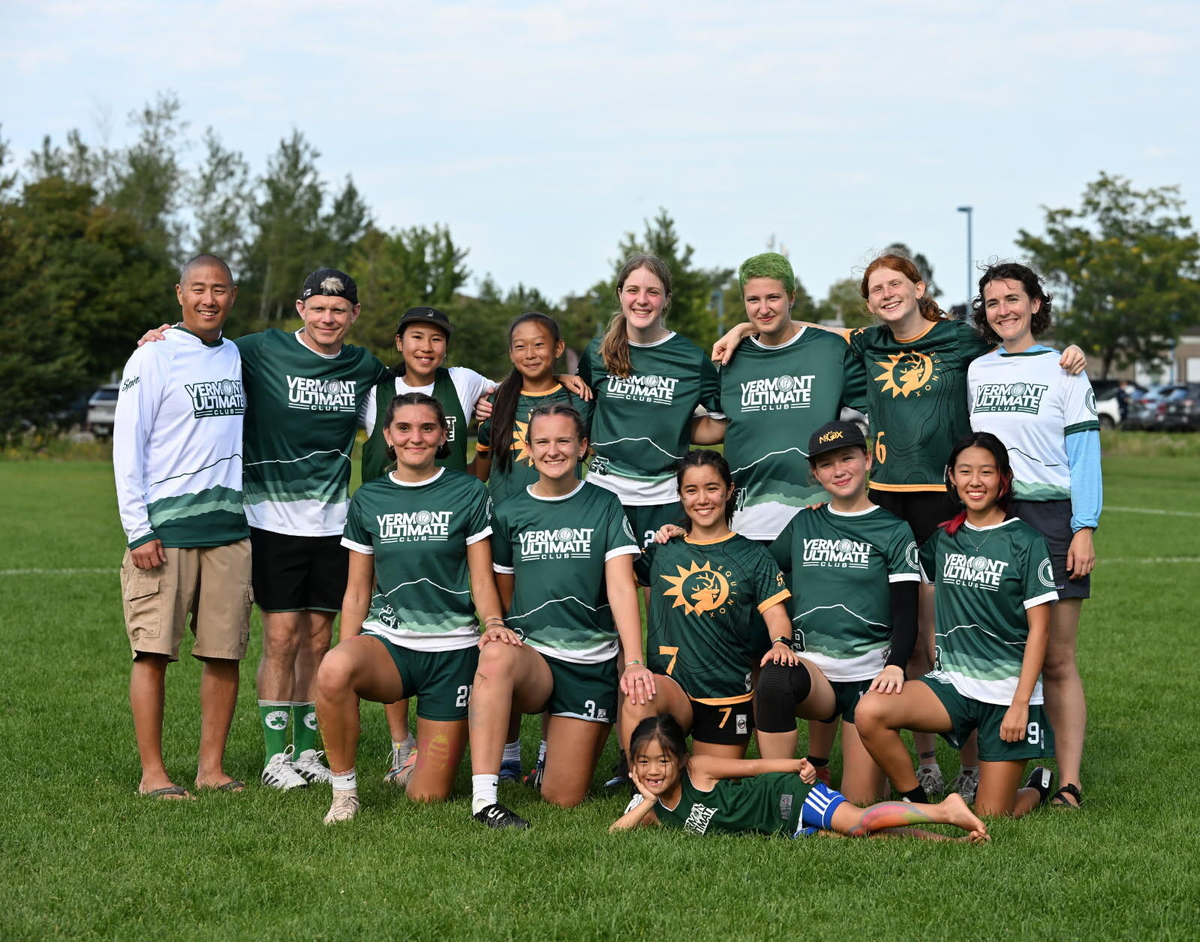
So, our focus right now for the spring 2027 season is to get a middle school girls division started, which we’re really excited about. There’s already middle school programming in Vermont, and it’s co-ed, which in reality means that there’s sometimes a handful of girls playing with the boys. For any school that has had 10 girls at a given time, they have no reason to start a girls team, because there’s no division to plug into. So we’re bringing a group of people — organizers and schools — together to all try to start a program at the same time.
What have you learned about keeping kids involved in ultimate over the long term?
The Clemson Study results from USA Ultimate — that sense of belonging is so, so important. I coach a lot of teams, and for me, helping kids feel like they belong and feel like the best version of themselves is the most important thing I can do as a coach. I think when kids feel that sense of belonging, they want to stay, regardless of financial circumstances, or the other barriers that we’ve been talking about. I think when people feel like they belong, they want to keep participating.
How can initiatives such as the National Youth Ultimate Giving Week help organizations like Vermont Ultimate create opportunities for young people to experience the sport?
The more I’m in this position as Executive Director, the more I’m realizing that to meaningfully invest in growing the sport and expanding access, you need the resources to do so. There are so many teams in Vermont that have disappeared over the years, and it’s not because kids lose interest in participating, it’s often because whatever volunteer or coach was there making it happen has left. And then there’s nobody to fill that void.
When we’re able to invest in small communities, in bringing kids into the sport at a younger age, we’re also able to create more sustainable programs. And it takes time. It takes staff. It takes money, potentially for coach stipends, or for free discs or whatever it is.
When we do these school day takeovers, we give away discs to every kid that wants one, and it’s because the first time I went into a school and did a takeover, kids were so excited to have a disc, and I didn’t have enough resources to say yes. I walked away thinking, if we really want to grow the sport, we gotta say yes to these kids. We need them to go home and throw, to talk to their parents about how much fun they had, and that takes putting a disc in their hands. So at Vermont Ultimate, we’re saying yes to all those kids, and if we say yes to 100 kids, that’s almost $700 in discs that we’re giving away. But it’s a meaningful investment, a worthwhile investment to grow the sport, to create more opportunities for kids to play. I think that investment at the grassroots level, at any level, can really pay dividends when we look at what ultimate could look like in Vermont, or in the U.S., a few years down the road.
We’re trying to say yes to it as much as we can, even as we work to find the funding. I hope that the community is seeing how we’re investing in youth, in ultimate, and will want to continue to invest in us.
How does the USA Ultimate affiliate relationship support your work at Vermont Ultimate?
Having the overall support of USA Ultimate is a big benefit for Vermont. We can definitely feel that USA Ultimate is invested in the Vermont success story, and wants Vermont Ultimate to thrive. One of the biggest benefits is the insurance and just the ease of knowing that we’re covered and we have USA Ultimate as a resource to check in and make sure that we’re crossing our T’s and dotting our I’s.
I want USA Ultimate to continue to highlight those benefits so that we can take advantage of them. I will say one benefit that we really felt this year was USA Ultimate aligning itself with Vermont Ultimate when it comes to supporting our young athletes. So for our YCC bid fees, having players that we’re providing scholarships and subsidies for, having their player fee covered for YCC was really huge and meaningful. Knowing that USA Ultimate also wants to invest in these athletes that need financial assistance, it made a big difference for us with the number of athletes we were able to support, so that was a big one, for sure.
Is there anything you think local affiliates contribute to the sport that might not always be visible at the national level?
One of the things that I’ve been seeing more and more of is athletes who played in high school and then stopped participating for whatever reason. We had our community meeting at a pizza place in Burlington, and it actually happened two years in a row, where a server at the pizza place came up and said, “Oh, I love ultimate. I played in high school, and it was so fun. It was such a big part of my life, that experience was so awesome.”
It happened to me again yesterday. I was at a Parks and Rec conference, and someone who works on the grounds crew of a town’s Parks and Rec department was like, “I played for four years in high school, and I absolutely loved it. None of the other sports were the right fit for me, and ultimate was, and I’m so glad that I got to play.”
I think that’s something that a lot of local disc orgs are doing, is providing this really awesome opportunity for kids to play, even if they’re not going to go on and play in college, or for a national team. I think providing this space for folks to come in and play and belong is something really special that disc orgs are doing.
We often focus on player retention as success, but I think there’s a lot of people who are just gonna jump into the sport for a little bit and still have really meaningful experiences, even if they decide that all they wanted to do was play for a few years in high school or the local level.
Why is it important for the ultimate community to invest in the next generation of players?
Ultimate is such an incredible sport, and I think a lot of folks in the ultimate community to some extent take for granted the types of people, communities and values that ultimate creates. At a time where we are so divided as a people, as communities, ultimate pushes us to meet folks in the middle, find common ground — and even if we’re agreeing to disagree — be in a space together and play this sport together. I think it is such a valuable tool for folks to have to be able to find common ground.
The values that ultimate creates and spreads are so valuable for all of our communities and people of all ages, but I think youth in particular. Ultimate really does bring people together, and that’s something that more and more youth need. Ultimate can pull people in and create a space where kids feel welcome, they feel belonging and they’re learning some really important life skills.