| In recognition of National Youth Ultimate Giving Week, Tristan Green, Director of the Ultimate Foundation, sat down with participating USA Ultimate Affiliates from across the U.S. to gain insight into their organizations, youth programs, and investments in the future of ultimate. Find your local affiliate, and donate today! |
Sarah Burns, Nickel City Ultimate (NCU) President, and Timothy “TJ” Burns, NCU Treasurer discuss the human resources needed to run a local disc organization, and how to create sustainable programs and forward momentum.
Tell us about Nickel City Ultimate’s mission, and what makes Buffalo unique?
TJ: The mission of NCU is really about the idea that ultimate can bring a community together.
So many things in Buffalo are really unified, which I think is different compared to a lot of other ultimate communities, where they may have club teams and other things going on, but they’re all siloed. We’re not a huge community, so it’s sort of by necessity, but everything is very interconnected and NCU directly supports all of our club teams. There’s a lot of synergy there, and opportunity to pull those players to help with other things in the community, and everybody is pretty aware of everything that’s going on. That brings some challenges as well, but I think it is a very unique thing for us.
One of the challenges is that club is such a strong part of the community, which means a lot of people are tied up during the summer — especially people who might be coaches — so how do we continue to grow in ways that are not dependent on hardcore ultimate players?
Our big focus now is bringing that idea out further. We have people that are already very united, but how do we expand to bring other people into our community, really catch the vision of what ultimate can be, and get them excited about it.
What are you most proud of when you look at how NCU has grown and developed?
Sarah: I want to touch a little more on working together with the different communities. So we have the college, the club, the youth. Currently we have probably about 10 to 15 coaches, and all of them are from college or club. They want to give back, and for most of last year, we didn’t have the funds, so they just volunteered.
We had a large college tournament, and the Color of Ultimate was at that tournament, and we had the youth kids come during halftime. So, we really do try to incorporate everyone from the community.
And one thing that we learned from other communities, especially starting with youth, is to make a space just for the girls. And I’ve had a lot of good feedback from the girls in that group that they really felt seen and appreciated, especially in that middle school age where it’s really tough for girls to continue. I’ve had a few that have tried out other things — like flag football, soccer — and they just haven’t found a safe space or a good coach, and I’ve been very happy with the people that we’ve put in place here to be with them.
What barriers prevent growth in your area, and how is your organization working to address them?
Sarah: The part we’re missing is, we put in a lot of hours, we don’t get paid. At some point NCU will have to get to a point where we could get paid, or we could pay someone else to do what we’re doing.This isn’t exactly sustainable, it’s just working out because of our lifestyle at the moment and NCU would vastly struggle if we couldn’t do what we’re doing.
TJ: Right now, we have three board members, us two, and Ajitpaul Mangat. And there’s Tyler Davis, a legacy member from the beginning. His full-time job is in youth programming, so he has a lot of knowledge and connections, but it was hard for him to dedicate a ton of time directly to NCU. But he is still there as a resource for us, which is really helpful as we’re trying to expand our youth offering.
Like Sarah said, there’s only so much that you can do without actually dedicating more time to it. And you can only really do that if there’s money. So that’s the big challenge.
A couple years ago, we made it a point to write down all the roles we want to fill and the job descriptions. Then people can apply to them, and there’s terms on them, so it’s very clear what you’re committing to. That has been a structure that was really important to start scaling a little bit more. It feels so much more mature, there’s so much more structure in place now organizationally.
How has NCU introduced youth programming to help bring new players to the sport?
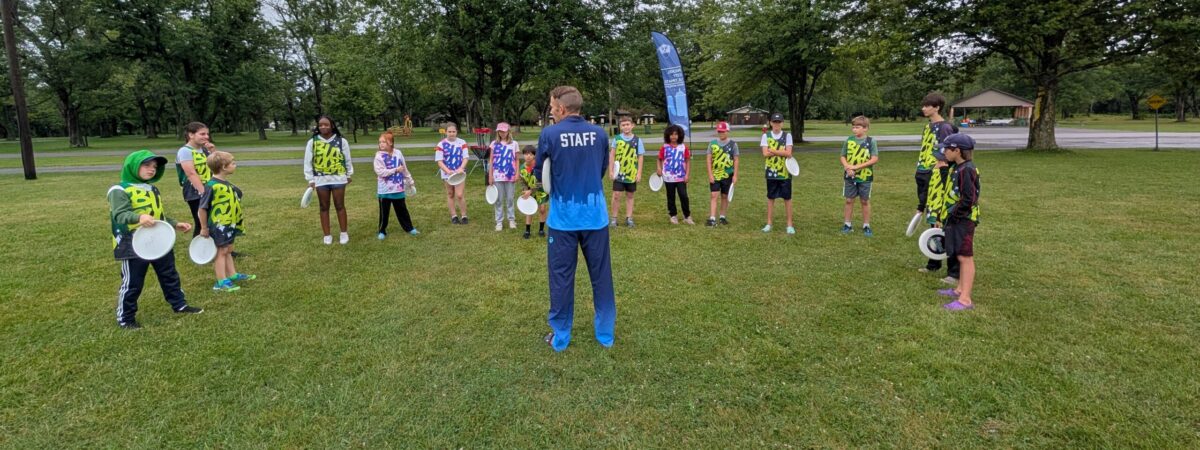
TJ: I think we’ve always known youth is the future. We’ve had little attempts at it, and I’m just proud of the fact that going into this past year we basically decided to just do things, let’s stop waiting and just do something that we think we can do. So we started in our homeschool community, by starting out with clinics, just one every month.
Sarah: TJ set it up through USA Ultimate to do the Learn to Play clinics. So I basically used Facebook, in any homeschool group I was a part of. I posted on Facebook, and then people were trickling in. I was pretty personable with a lot of people. It’s a lot of texting sometimes. I created my own registry — we use Google Suite for pretty much everything at NCU — but I was talking to USA Ultimate, and hopefully they’ll have something soon for help with registration.
So we’d have anywhere between 20 and 50 kids at each clinic, and then we started seeing a lot of returners, and people were asking, “okay, what else?”
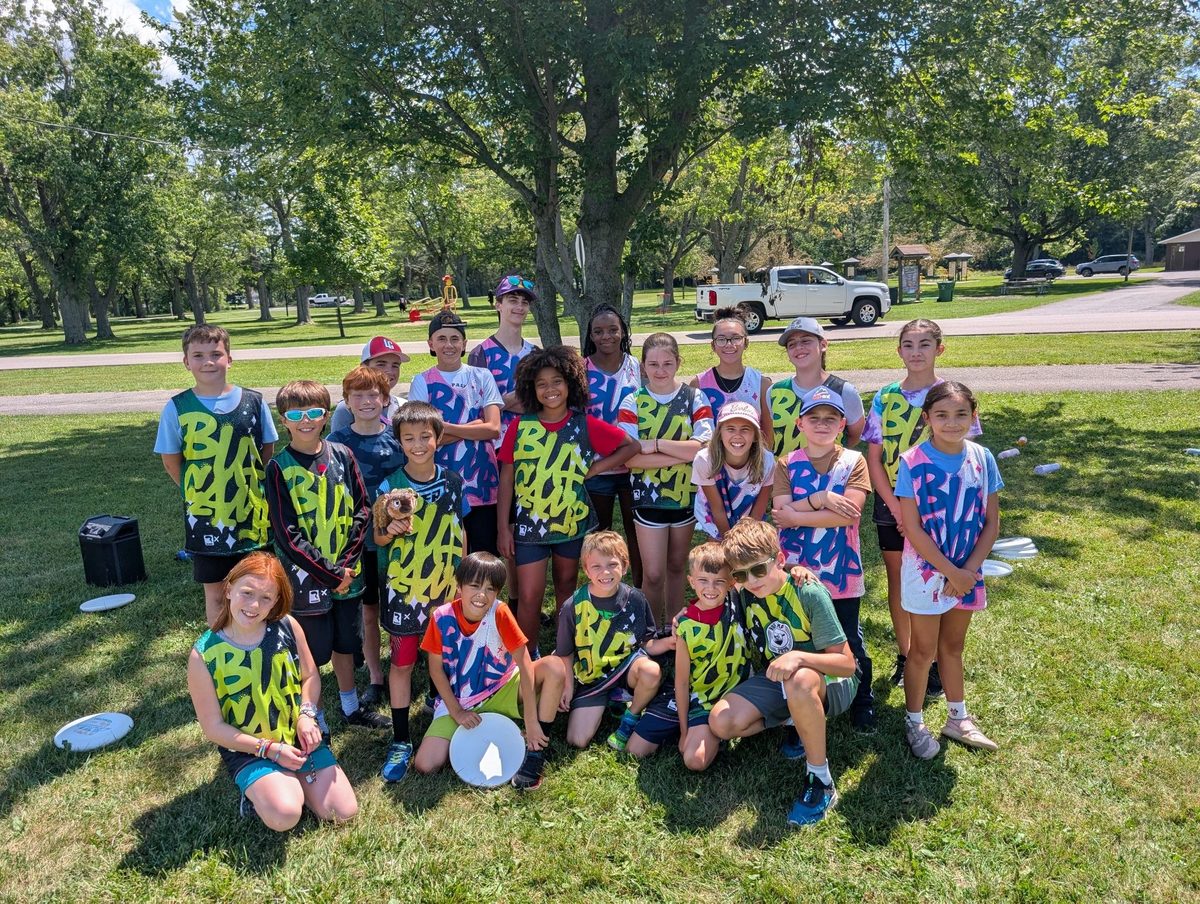
And TJ’s had this dream for a couple years about a camp, and I’m like, “We’ll just do it. We’re free, both of us could be there.” So we ended up with 25 kids that came for four days straight for eight hours, and came back every day. We had a little mascot stuffed animal. We had a flag up, a horn and other fun camp things. There would be moments of downtime where they could really get to know each other. So again, it was like, what was next?
TJ: We felt like we had enough consistent returners where we could have a league this fall, and we did, our last week of league is next week. So, I look back at this year and am really proud of the fact that we decided to stop waiting for the perfect moment, and we just made some things happen, and now there’s a lot to build on.
Sarah: And now we’re actually gonna bring a small squad over to Niskayuna, NY which is four hours away, and compete in a middle school one-day, round robin tournament in two weeks. So we’ll hit each thing — clinic, league, camp and a tournament this year for them, which they’re very, very excited about.
How does the USA Ultimate affiliate relationship support the work that you’re doing in Buffalo?
Sarah: Oh my gosh, it’s so nice to have. First of all, the communication, the easy communication with them. The back-end stuff, TJ can probably talk about rostering and sanctioning, and so I’ll let him talk about that.
TJ: Yeah, it is much easier having that relationship with them to manage it all and to navigate, because I can just reach out and ask. They are eager to hear input about what you are struggling with, and what would make it smoother or more streamlined, and that I really value and appreciate.
And you know, they’ve really been making a point to work with the affiliates and us in particular about ways to apply to certain grants or even the affiliate rebate. As a Tier 1 affiliate, there’s a lot of benchmarks to hit. But if we hit them, it’s a substantial amount of money that comes back into our pocket, from people who are participating in all of our programming, and we can then turn around and put that back into growth. So that has been really, really huge for us as well.
What do you think local organizations contribute to the sport that might not be visible at the national level?
Sarah: I don’t know if you heard the Northeast Regionals was postponed. We actually were the ones who picked it up, and we were able to plan and host a tournament alongside BUDA, pretty much in four days.
TJ: It wouldn’t have been possible if we were just random club players, but the fact that we have this organization here and have resources available means that we can step in and run a huge event like that in a really short amount of time. And we have a lot of other stuff, we have all the cones and water jugs and all the random things, and the relationships with the field site and all the other vendors that you need to pull in. That organizational knowledge I think sometimes gets forgotten or taken for granted in the club community.
Affiliate organizations are well-structured, and there’s a lot of resources and institutional knowledge that builds up in those structures and allows us to be able to put on quality events and do all sorts of different things. But I think that it’s not really known by a lot of people.
What are your organization’s big priorities for the next few years?
TJ: Well, we had laid out a three-year roadmap at the beginning of this year of what we wanted to see happen with youth. This year was a lot about getting people involved. We wanted to run a Learn to Play clinic every month, and that quickly grew beyond our expectations. And we also wanted to do the camp this year. So we achieved both of those things, but we also are now doing this league, which is ahead of schedule. Next year, we wanted to try to transition into a league format that gets kids playing more regularly. And then the third year was about establishing a team for the kids who really love this and we want to start traveling. That would be the next thing. And so we already started a lot of that now at the end of this first year, but I still wanna have that progression.
I think we all wanna see next year expand outside of the homeschool realm and really get more schools involved, particularly at the middle school level where there’s less statewide stuff you have to deal with. What I would love to see happen next year is to get into some of these middle schools around the city, and we can start having our leagues, but they are teams that come from the schools. That just feels fun and exciting to have that identity. So I think that, maybe if I had to theme it, the next year or two is all about building more identity and going out into the school system. So then our homeschool group could be one or a collection of teams in the midst of that, but they aren’t the sole participants.
How can initiatives such as the giving week help organizations like yours create more opportunities for young people to experience this sport?
TJ: In my mind, if you can get people who are really excited about helping you grow the next generation of ultimate, that could be one of the more sustainable ways to provide those resources. Grant writing is such a cumbersome thing, and a lot of times when you get a grant, it has to be dedicated very specifically, you don’t have a lot of flexibility with it. And so, this type of giving really gives us the maximum flexibility to do the things that are going to have the biggest impact for our community.
There definitely will be grants that are well aligned that we want to apply for. USA Ultimate is going to be providing a youth growth grant opportunity, and I’m very interested in that. But, this type of community-driven giving is really exciting because of the flexibility that it brings in terms of field space, paying people and developing coaches, and safety is a part of that. We really wanted to get everybody Red Cross certified, and that’s something that we just invested in. But to keep doing that in perpetuity throughout the years will require ongoing support. And so I think those are the ways that this has the biggest impact and why I’m so excited about it.
