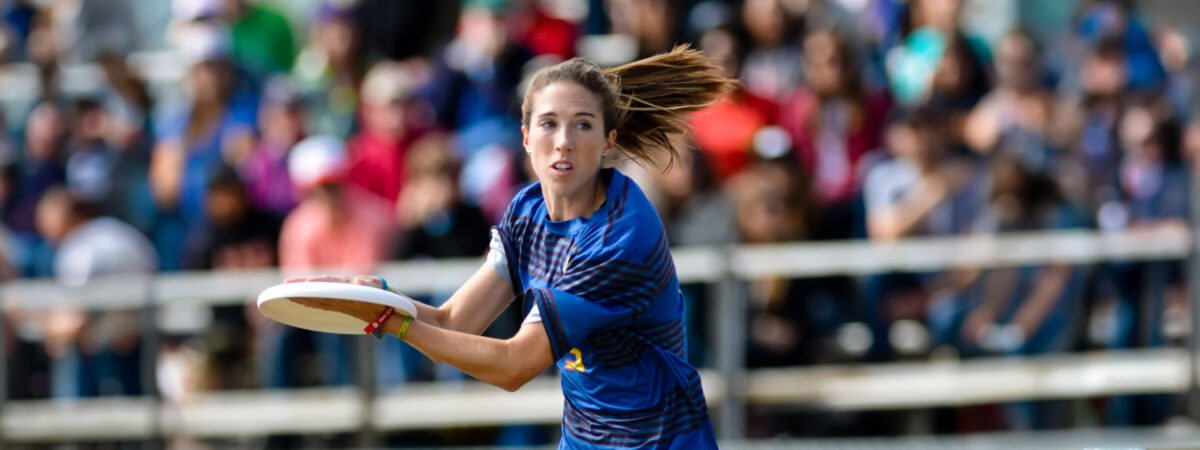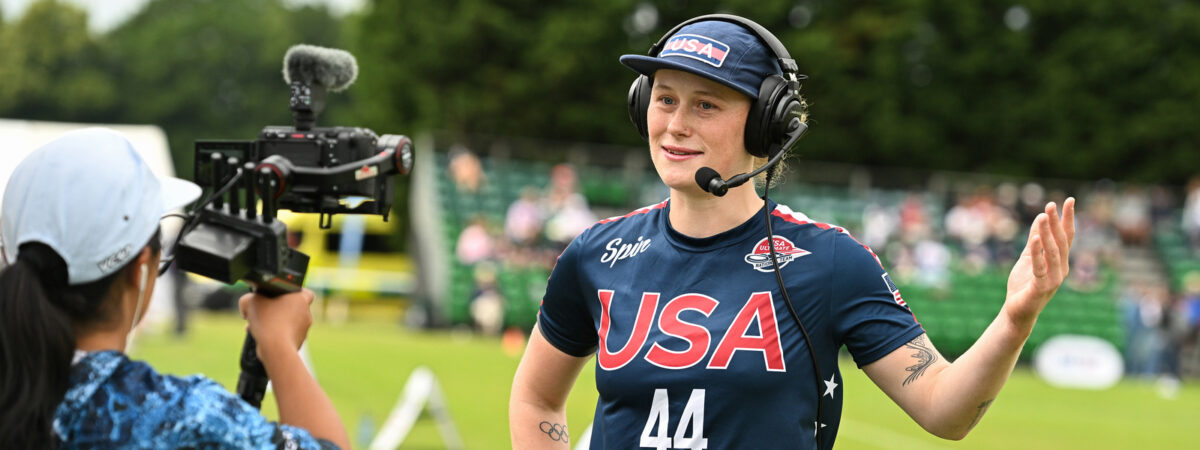
In the world of sports, female athletes often face unique challenges. One such challenge is that they have an increased risk of experiencing specific types of sport injuries — such as ACL injuries, bone stress injuries, concussions, and shoulder instability. The ACL is particularly at risk in sports that involve cutting, pivoting and sudden changes in direction. These include sports like soccer, basketball and of course ultimate.
Coming back to sport following a severe injury is no easy feat, and one that many athletes decide not to attempt. In a recent Clemson University study of former women matching ultimate athletes, injury or fear of re-injury emerged as a decisive factor in why they left the sport. These athletes are not alone. Following ACL reconstruction surgery only 55% of athletes return to competitive sport. But this changes at the highest levels, with 83% of Elite athletes returning post-reconstruction.
To learn more about what drives athletes competing at the top of their sport to rehab and return, we reached out to Olympian and World Champion Stacy Gaskill to discuss how she overcame injury to stay among the best in the world at both snowboard cross and ultimate.
Interview With Stacy Gaskill
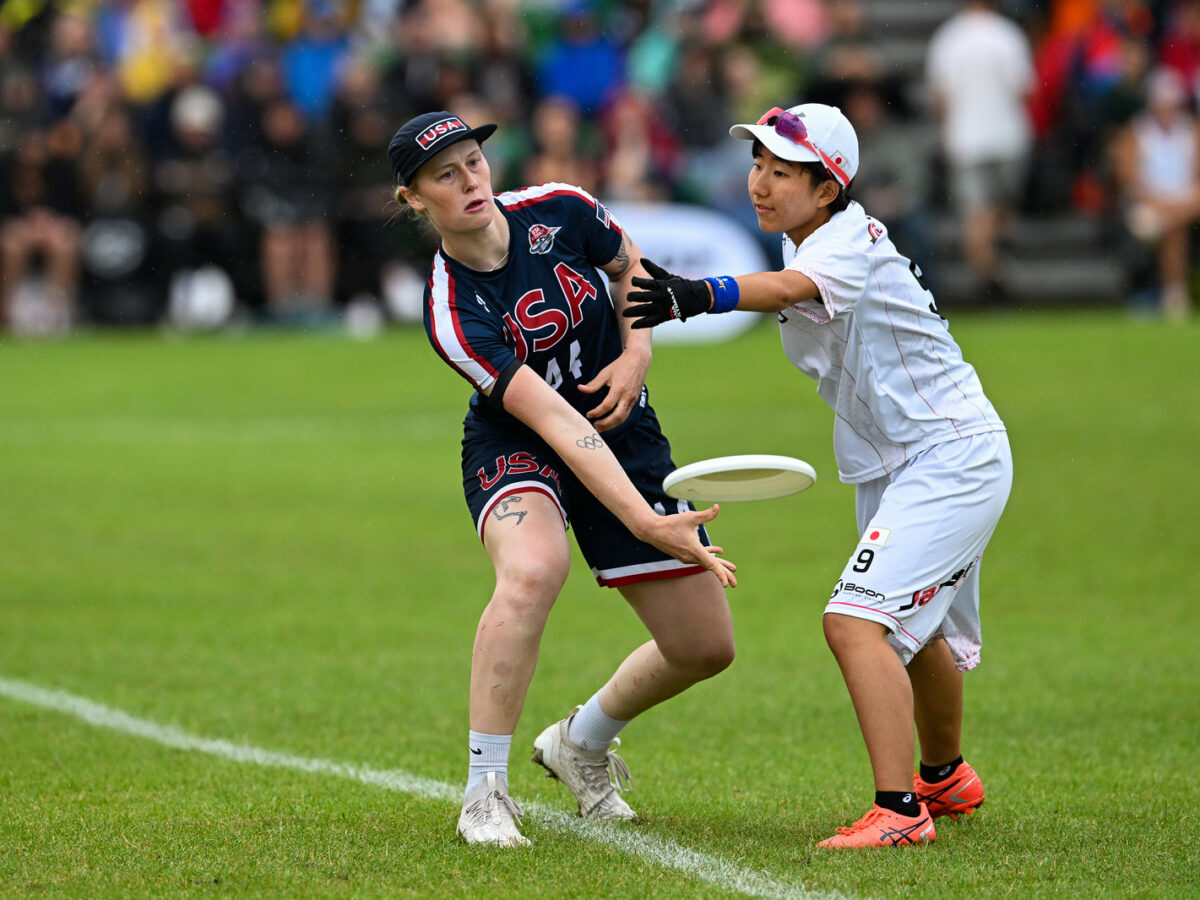
Stacy Gaskill, of Golden, Colo., is a two-time Olympian having competed in snowboard cross at the 2022 and 2026 Winter Olympics. She is also a three-time Ultimate World Champion — taking gold as part of the 2018 World Juniors girls team, as well as the 2019 and 2023 World U-24 women’s teams.
The following interview has been edited for clarity.
Coming back from injury isn’t a new experience for you, and it isn’t always a smooth road. Can you tell us about your latest recovery, any setbacks you experienced, and how you deal with an uncertain recovery timeline?
“This last rehab that I went through was definitely the hardest one of my career. I blew my ACL completely in December of 2024 and then had it reconstructed just before New Year’s, but it wasn’t straightforward.
Four months in I was lifting the heaviest I ever had and felt really strong. But it turns out my rehab had been mismanaged a little bit, so by the time we caught it I ended up with almost a 55% quad deficit and asymmetry to my right leg. Then I had a second surgery in May to clean up scar tissue, address pain and extension, and give me a better chance of making the timeline I needed for the Games.
I spent six weeks relearning how to walk with proper movement patterns and then the next 8 to 12 weeks relearning how to move in all the ways I’ve moved my whole life. It was really challenging given the timeline I had and the strength deficits I faced. I also dealt with some nerve stuff that was hard to diagnose and then to treat.
We finally got to a point in September where we kind of had to fast track the essential parts of rehab to give myself a chance to get on snow with enough time before the Olympic qualifiers. Come the beginning of November I had not finished all the elements of my rehab, but it was enough to be back on snow with restrictions and limitations — to do the best we could to try and make the Olympic team.
So I got back on snow mid-November and then have been doing my best to maintain strength and find the balance of performance and pushing myself, without putting myself in unnecessary risk.
As far as an uncertain recovery timeline, I think that sums up the entirety of this last rehab. What grounded me on the really hard days when I found out I was set back months or wasn’t making the progress I needed to, I was able to hold myself to a high standard of effort. I would say ‘day by day’ and just remind myself that the work could be intentional. Each day was really important and it did make a difference. Even if it wasn’t super tangible, it was slowly getting me to where I needed to be.
An uncertain recovery timeline is really challenging, especially when you have deadlines and you’re not sure if you’ll make them. But I had an amazing team around me who did everything in their power to get me to a point where I was safe enough and strong enough to compete and have a chance at the Olympics. And I got that chance, and I’m so grateful for that and for my team. Having that mantra and intentional presence made that uncertainty just a little bit more manageable.”
What keeps you motivated to not just heal from the injury, but to push to get back to elite performance in your respective sports?
“I’ve faced enough hard days and days where I wasn’t motivated and I didn’t have that excitement to show up and put in the work, that I’ve had to be really intentional about practicing discipline and learning that skill — because it very much is a skill. So while there is motivation sometimes and other times it’s a little bit harder to find, I rely on my practice of discipline and recognizing that the bigger picture holds more weight than the daily feelings and desires.
At the end of the day, I know that I can be the best in the world. I know that I have the physical attributes and that I can work just as hard, if not harder, to get to a point that gives me a chance to contend for that position. Knowing that I have an ability and opportunity to be in that position makes the discipline easier — to show up every day, even when I don’t feel like it. So I don’t know if it’s so much about motivation, but more about intention and awareness of the bigger picture. I love playing and I love competing whether that’s in snowboarding or ultimate and I love the opportunity to showcase the very best that I can be. Fighting every day to be better than I was the day before is really everything that I need.”
Recent research from a Clemson University study of former women matching players showed they didn’t leave ultimate because they had lost interest in the sport. Instead, injury and fear of re-injury are among the significant themes for why these players no longer compete. There is a certain level of injury risk with most competitive sport. How do you deal with the mental aspects of returning to competition after a major injury, knowing the risk is still there?
“That’s a really interesting question. I have dealt with my fair share of pretty significant injuries, most of them are snowboard related. And so when I think of ultimate, I think there’s definitely not as much trauma associated with returning to sport because I wasn’t injured in that sport as severely, but I think it does translate across when you are considering the mental aspect of returning.
It’s different from one person to the next. For me, I love to compete. I have always been the most competitive person in my family, the most competitive person in the room. I think that I’ve found myself with a lot of injuries because I do try to push the limit and I try to find just how much I’m capable of. I’ve overshot that a couple times or just found myself in the wrong place at the wrong time, and it’s kind of what happened with my knee.
Coming back, I’ve had this drive to showcase what I’m capable of. Because I know it’s more than I got to show last time. It comes down to each person’s individual motivations and why they show up in a space. For me, I love snowboarding. I love ultimate. I haven’t yet gotten back onto a field, but the idea of running again and having the chance to be the best version of myself and make an impact in a space where my team counts on me is really exciting to me, and that is stronger than the fear of reinjury.
The way I always look at it, and I’ve tried to practice a lot of intention in this, is that fear is always present and I think that it’s necessary. So I’m never trying to get rid of fear. I recognize that it’s there and it’s natural. And the more I fight it, the less presence I have to give to what I’m actually doing. Instead, I imagine I’m driving a car and fear is sitting in the passenger seat and it’s there, but I’m still the one driving the car. And that is this metaphor that has held true throughout most of my career. Recognizing that it’s present and it’s going to be no matter how much I fight it, but I’m still the one in control. And I think that applies to reinjury. There’s always a fear of doing it again, of doing it worse, of not coming back at the same level you were and not being better. But I’m still the one driving and I know what I’m capable of.“
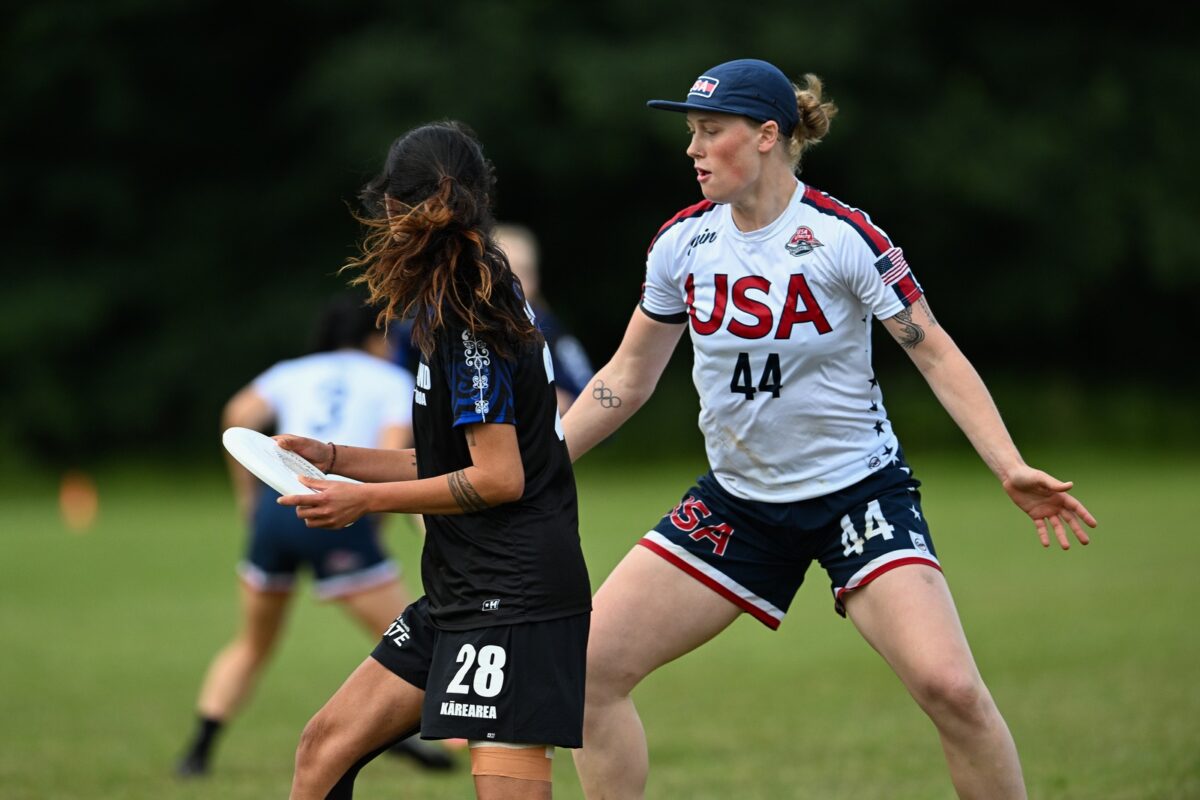
What would you say to these women who are struggling to return after an injury?
“I would say spend some time with yourself outside of sports. Spend some time realizing what it is that drove you to be there in the first place. Something that I really focused on through this rehab was presence. Learning how I wanted to show up in spaces, how to be the person I wanted to be in those spaces.
I’m in sport because I love to compete. It’s an amazing outlet and I have these amazing communities and I love to see what I’m capable of. Those were my intentions to focus on and remind myself to be where my feet are — as opposed to worrying about what might happen, whether I make the team, whether I’m in this competition, whether I win. All of those things were distractions to why I showed up in that space in the first place. So that’s what I would say — spend some time with yourself without all of those distractions and learn what it is that drives you. And yeah, the risk will always be there, and I think that’s a great question that can apply to so many aspects in life outside of sport — is this worth the risk to be where I want to be?”
You’ve had some big moments this past year with returning to the Cervinia World Cup course, qualifying for and competing in the 2026 Winter Olympics, and now continuing on with the World Cup circuit. Are there moments that stand out where you feel like “this is why I came back, this makes it all worth it”?
“Returning to Cervinia was a big moment for me because that is the course that I blew my knee on. The course actually holds a lot of significance in my snowboard career — it’s the first World Cup I was ever at, it’s the first time I ever raced heats in the World Cup. I ended up blowing my knee there last year and then that was the very first race back exactly a year later, and it was an Olympic qualifier.
So, showing up there — I definitely was overwhelmed with emotions and as much work as I tried to do with mindfulness and mental prep, there was still a lot sitting in the back of my head. Showing up and realizing that there was the same feature that I blew my knee on, on this course. And it turned out that qualifying day was exactly 365 days after I had done that. Even trying to block all that out, I was definitely holding it as well. I ended up qualifying 11th and was able to run heats and finish with a top 10 which actually put me in a really good position for the Olympic team selection, on a course that holds a lot of emotional weight for me and that was huge.
Tenth place is not necessarily something that I’m striving for, in my normal World Cup dreams, but it was really significant in that it validated all the work that I did and all the moments where I was like ‘is this even what I want to be doing because I’m exhausted and the idea of coming back into this space feels like more than I can handle’. So, being able to put down a top 10 and be healthy and know that it was just the tip of the iceberg of what I was capable of this season was really big for me.
That moment of finishing and realizing that this is just the beginning is part of the reason why I came back. So far I have chosen not to give up and to continue to push those limits and see exactly what I can do. There was definitely a moment of release, realizing this is still reasonable after my knee and after what I’ve been through. I still have so much to give, and that moment being there really reminded me of that.
And then, getting to the Olympics. I don’t feel like I did what I would have liked to have done there, but I definitely went into the Games with a lot more perspective than I had last time. And that alone was such a win for me. I might not have put up the result that I wanted, but I had such an awareness of the opportunity and the fact that I worked really hard to get to that moment. It would have been a waste not to enjoy it, and so I did enjoy it. To be able to enjoy that moment regardless of the outcome was big for me — in my mental progression and my career and why I choose to be in the spaces I choose to be in.”
You had a tight timeline to recover and return to elite competition ahead of the Olympics. Now that you’re fully back to snowboard cross competition, do you have any plans regarding ultimate you can share?
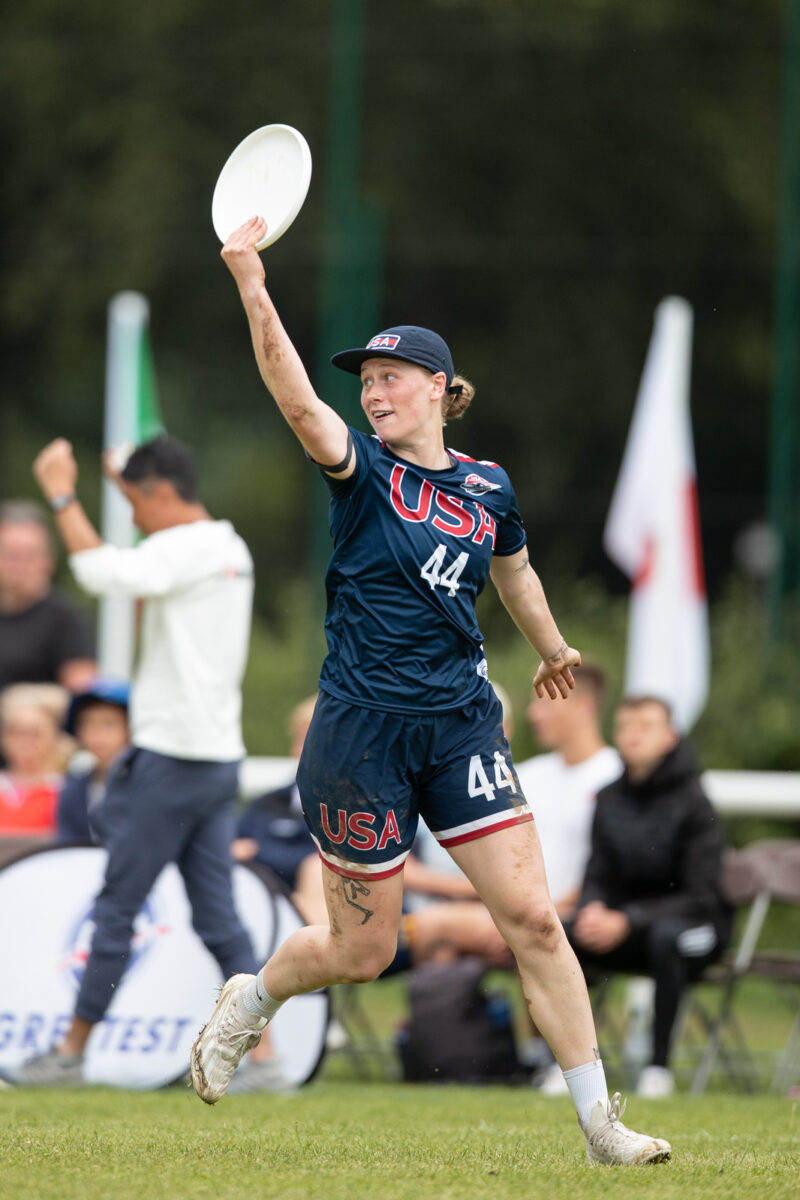
“I’m really not fully back. I probably still have 8 to 12 weeks of rehab to finish when I get back from the season, but we’ve done enough of the progressions where it’s a safe enough risk-to-reward ratio — or it’s a risk that I choose to take — to be able to finish the season. So I still have rehab to finish, which includes a return to run and sprint, change of direction, lateral progressions, and repeated impact, which is all pretty necessary for ultimate. So because of that, I unfortunately will not be ready for the club season this year. My goal was to be out in the Pacific Northwest and have the chance to try out for some of the women’s teams there. But I chose to prioritize the Olympics, which means that now I have to finish this rehab and I won’t be ready for those tryouts.
So, no club for me this season. I will start to work back into playing, getting up to full speed, feeling good through my knees and in cleats, getting a disc back in my hands. Then I’m really hoping to be back on the field and in the club division playing with my community next summer. And I don’t know, maybe PUL, maybe WUL. I’ll consider it, but it kind of depends how it lines up with our year. There’s a lot I still have to give in ultimate and I had to take a step back to prioritize these Games and then an even bigger step back with my knee. But I’m not done with ultimate and I am still so fired up just at the idea of playing whether that’s mini in the park or on the club stage or the national stage. So I am definitely going to fight for the opportunities to be in those spaces and to show up the best version I can be.“
Best of luck with the World Cup circuit, we’ll be watching and hope to see you return to the ultimate field soon!
Tips for Injury Prevention
According to a 2023 article from Northwestern Medicine, there are four key steps female athletes can take to reduce the risk of ACL injury or reinjury.
- Train consistently. Stay active during the off-season. Use this time to work on strength and flexibility exercises that improve balance and coordination.
- Practice landing skills and direction changes. Proper mechanics are essential. When athletes make directional shifts or land without bending their knees this increases the chance of an ACL injury.
- Warm up before playing. A good warm up should incorporate sport-specific exercises and include time for stretching which helps prevent muscle strains.
- Strengthen muscles. Focus on strengthening muscles in the lower body and core. A strong core and hips can improve balance, while strong hamstrings and quadriceps work together to move and support the leg.
In addition to strengthening muscles it is also important to improve the coordination and control of the leg muscles so the athlete’s body is prepared to respond more effectively to the demands of the sport.
“A key consideration to keep in mind for athletes, coaches and parents when creating or participating in injury prevention programs is that they shouldn’t focus on just one type of exercise, but rather categories of exercises. There is strengthening, balance, core and lower extremity exercises and then progressions within each of those categories,” says Mary K. Mulcahey, MD — an orthopaedic surgeon and Director of the Women’s Sports Medicine program at Loyola Medicine. This program focuses on injury prevention and treatment for female athletes, as well as supporting them in maintaining a high level of athletic performance.
In a 2024 article on the importance of the ACL, why female athletes are at a higher risk for these injuries, and how to prevent and treat them, Dr. Mulcahey also calls out the importance of proper footwear. The article states that:
“The right footwear can make a significant difference in reducing ACL injury risk. Athletic shoes that provide adequate support and fit the sport’s specific demands can help in maintaining proper leg alignment and stability.”
Should an ACL injury occur, early diagnosis is key to preventing further damage and starting the path to recovery. A doctor can assess the extent of the injury — which can range from a mild sprain to a complete tear — and help ensure timely and appropriate care.
Learn More
USA Ultimate is committed to supporting the overall health, safety and well-being of the ultimate community. Understanding injury prevention strategies and signs of a potential injury can help athletes be proactive about their health. For additional information and insights on this topic, visit the Injury Prevention course on USA Ultimate’s Mobile Coach.