Participating in sports has clear benefits that extend beyond the field of play. While this is true for all individuals, reports from The Tucker Center for Research on Girls & Women in Sport show that girls who remain active experience lifelong benefits including better mental health, stronger friendships, higher academic achievement, and career advantages later in life. However, despite both the immediate and long-term benefits of athletic participation, by the age of 14 girls have dropped out of sport at twice the rate of boys. Ultimate is not immune to the effects of this gender participation gap. At last year’s Youth Club Championships, male matching players outnumbered female matching players nearly two to one.
What keeps girls engaged in sport? Research shows that experiencing progress and development within their sport are key drivers that motivate girls to stay. Additionally, girls with strong social connections who feel they belong are three times more likely to stay in sport and 70% of girls say friendships and team connections are a reason they keep playing. These motivating factors are areas where the sport of ultimate — and the concept of the Spirit of the Game — have an opportunity to shine in engaging girls and creating a path to lifelong participation.
Coaches can play a key role in creating a clear path for skill development and progression within the sport, as well as a sense of community and belonging within a team. Coaches who emphasize skill mastery over winning see higher enjoyment and retention, and 80% of girls say a positive coach relationship is a top reason they keep playing. One such coach, Cara Crouch, was nominated by her community as an outstanding example of someone who inspires participation, creates recognition, and supports a sense of belonging for her athletes.
“Cara was one of my first college coaches and the first Callahan winner in my direct orbit. She could have (even should have) had a huge ego, but instead was extremely humble. Right from the start she taught me that you can be competitive and intense, but still be kind and Spirited. I remember having to guard her when we were both playing in Austin and just knowing how completely incapable I was of containing her greatness. Later on I had the privilege of coaching with her, and I was unsurprised when she was inducted into the Ultimate Hall of Fame. She’s absolutely in my hall of fame too.”
– Libby Cravens, Outreach Director at Altitude Ultimate in Denver.
Interview with Cara Crouch
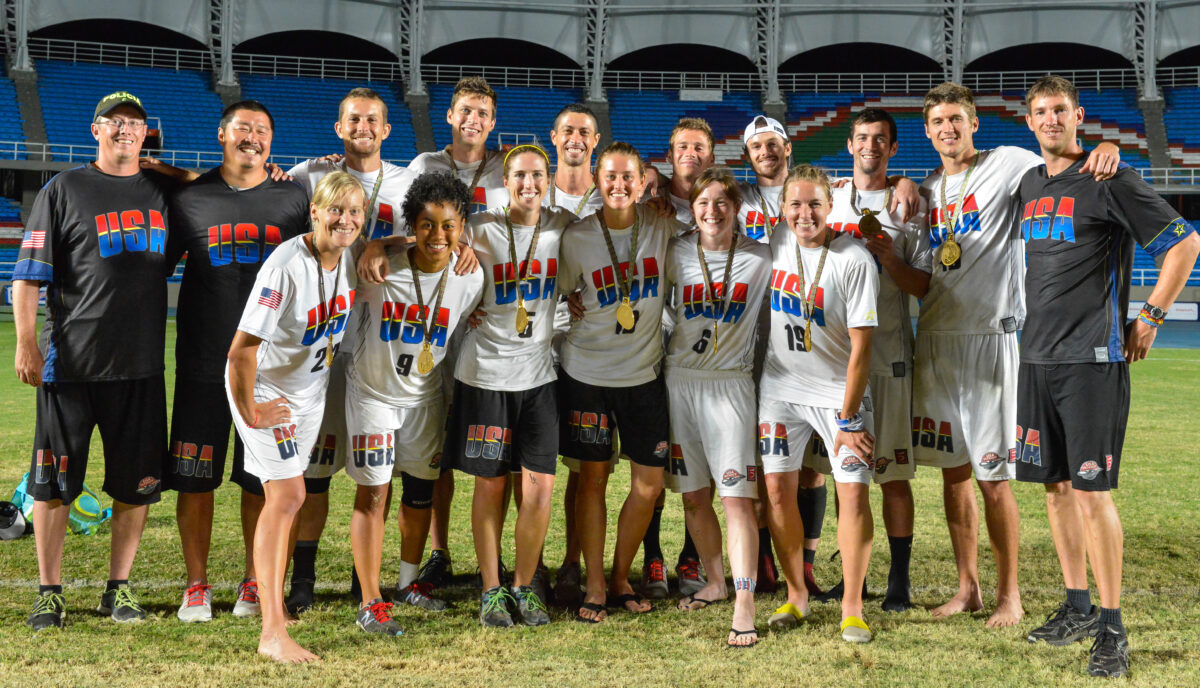
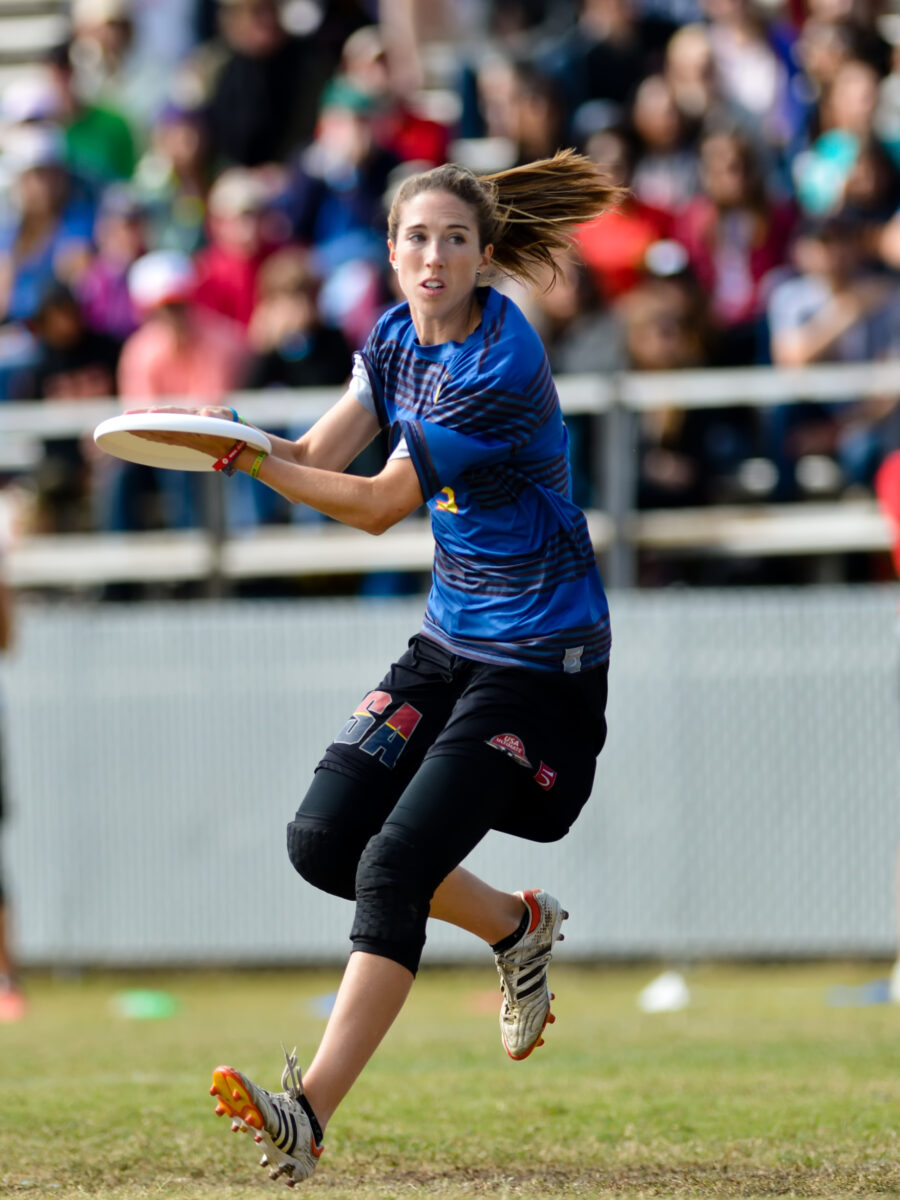
An elite athlete in her own right, Callahan Winner, two time World Games Gold Medalist, and Hall of Famer Cara Crouch has been a coach almost as long as she’s been a player. Coaching at nearly every level — from middle and high school teams through college and the National Ultimate Training Camp — Crouch brings a competitive edge while embodying the Spirit of the Game.
The following interview has been edited for clarity.
You’ve had a successful and varied career as an ultimate athlete, playing both nationally and internationally at the highest levels. In addition to developing yourself as an athlete and staying on top of your game, what first inspired you to invest your time and energy into coaching as well?
I was obsessed! Ultimate was all that I wanted to do or think about, and I wanted the world — and especially younger kids — to know about it. I also had the time, and had zero concept of life balance. So I started coaching the LASA High School team when I was just out of college. And then, as soon as I felt like I was far enough out from college to not be good friends with the players, I coached the University of Texas women’s team and the Kealing Middle School team concurrently. I think I was probably inspired by my dad, who had a demanding career and prioritized coaching my soccer teams all throughout my childhood and adolescence.
So much of ultimate’s sport development has been driven by passionate — you might say obsessed — players like you, whose love for the sport is contagious. What was it about your early experiences with this sport and this community that captured your interest and inspired that sense of belonging?
My experience with sports before ultimate was in competitive soccer, and it couldn’t have been more different in terms of team culture and community. My memories from soccer include being instructed how to pull jerseys without being seen by the referee and being told to pick up the ball when it went out of bounds, even if I kicked it out. While I know my experience doesn’t define the sport of soccer, and while I had good friends on the team, the team culture was not one based on respect, teamwork and a shared sense of purpose — because everyone was so focused on competing for playing time.
I played pickup ultimate a few times in high school, and I felt confident with the field space and sprinting. I liked that it felt more collective. It made a strong enough impression that I came to the University of Texas with the goal of starting a women’s ultimate intramural team with people from my all-girls dorm, but I quickly found out that ultimate was not an intramural sport. One day I saw a few guys throwing in my dorm’s quad, and I went down from my room to ask to throw with them. It turned out they played for the men’s team, and they offered to bring me to practice that night for the newly founded UT women’s ultimate team. The tiny team was made up of older, wiser, inclusive, supportive and incredible women. Over the next couple of years, we built the UT women’s program together and the sense of building something meaningful with people I loved and respected was deeply fulfilling. In addition to training, and organizing all the logistics of a program, we grinded to recruit players and a coach, wrote a team constitution, established a governing board and hustled to raise funds — with little outside support. It was validating to achieve success together as the team grew and we won more and more games.
The last thing that captured my heart was traveling to tournaments and meeting the larger ultimate community. Battling it out on the field, then writing cheers for each other after the game (and often playing games or partying together) was so wildly different from my previous perspective of “the opponent” and I loved how it prioritized relationships and respect over the result of the game.
You mention that in ultimate you found an inclusive and supportive environment. As a community we pride ourselves on that, but recent research from a Clemson University study of women matching players who have left ultimate indicated that not having an inclusive and supportive environment is a key factor in why women leave the sport. What role do you think coaching plays in creating inclusive spaces?
At the youth level, I think coaches have a lot of influence in creating inclusive and supportive environments for all players. As the age of the players increases I think the coach probably exerts less influence on team inclusivity in the social sphere since it’s a group of adults, but coaches still have important influence in the design of practices and game strategies that value both male and female matching players.
In Austin, many girls from our middle school ultimate program would stop playing in high school when they got to a team where they were seriously outnumbered, or the team culture wasn’t inclusive, so we started a monthly all female matching pickup practice. Any female matching players were welcome, from elementary to high school, and some girls would drive from as far as San Antonio to play with us. It definitely helped our YCC U-17 girls team be more successful at the Youth Club Championships since they were developing their skills all year long and getting more touches than they traditionally did scrimmaging with high school boys. I believe it also helped retain female matching players on high school teams since they were building skills and confidence, and also building friendships with other female matching players across Austin.
Our family moved to Costa Rica almost 2 years ago and my husband Mike and I started an ultimate program here at the school where we both teach, a half Costa Rican and half international school. We immediately had a large group of boys and a handful of girls sign up, and began to teach them the game in one hour a week sessions. By the second trimester, almost all of the girls had stopped coming. We tried multiple iterations — focusing on a smaller group who were really interested in learning the game, adding an after school extracurricular program, opening up the age range — and still by the end of the year there were zero girls still playing.
After a year of building relationships, targeted recruitment, and bi-monthly informal beach pickup games, we started over this year and about a third of the kids are female matching! I think the small successes we’ve had can be attributed to setting high expectations for Spirit/sportsmanship and intervening when those expectations aren’t being met, designing practices where everyone can improve and feel successful (not just scrimmaging the whole time, when our younger female matching players don’t get thrown to as often) and providing the female matching players with opportunities to use their voice and lead.
As a coach, how do you balance the desire for competitiveness with the need to allow everyone on the team a chance to develop as athletes?
I think it depends on the age of the players. At the youth level, up until late middle or early high school, I think it should be almost entirely focused on development since their bodies are still growing. The reality is that many of these kids are not going to play ultimate as their only sport, so I think the focus should be on developing basic athleticism, healthy habits around exercise and lifestyle, and fostering teamwork and self-esteem. I picked this up from my dad, the most competitive person I’ve ever known, because when he coached my soccer teams from age 4 to 13 he always prioritized equal playing time to foster development. Even as I entered the more competitive levels of Division I, he advocated for the players to play equally.
Lastly, to manage the emotional toll of balancing development vs competition on a team, it’s important for the coaches to communicate expectations that align with the team goals at different points throughout the season. When I coached the YCC U-17 girls team in Texas, the coaches would communicate with each player before nationals about their strengths, what roles they were likely to play, and give them an idea of what kind of playing time they could realistically expect (shout out to my incredible co-coach Katie Herbers who was so good at doing this clearly and kindly).
You’ve experienced almost every aspect of the sport of ultimate — from coaching kids to playing at an elite level. What aspects of the sport keep you coming back, and what changes do you hope to see for the next generation of players?
Have you ever done ‘dog drill’ with a group of kids? It’s the favorite drill of every team I’ve ever coached because, like ultimate, it involves competition, speed, spatial calculations, failure, perseverance and absolute elation when the disc is finally caught or a beautiful throw is made. Or have you ever been traveling somewhere unfamiliar and brought out a disc to throw, only to find yourself throwing with a gaggle of kids within a few minutes? Mike and I have traveled to nearly 30 countries, most of them with a disc in tow, and ended up throwing with dozens of children who don’t speak the same language but are drawn to the collective action of launching a disc in flight. Ultimate is collective, it’s fun and it’s fulfilling — that is why I keep coming back, as a player and coach.
In terms of changes for the next generation, I hope to see more kids playing, and more female matching players and people of color playing and coaching. And as it becomes more “mainstream” with the increased visibility of professional leagues and broadcasts, I hope that the sport continues to remain in the hands of the players on the field (to make most of their own calls) and that the concept of Spirit of the Game, or sportsmanship, continues to be emphasized in the rules and practices.
Coaching HER®
The Women in Sports Foundation found that organizations with trained coaches see a 40% higher retention rate among girls. To help ensure coaches in the ultimate community have access to the latest research and training modules on how to coach girls for success, USA Ultimate has partnered with The Tucker Center, a research center and global thought leader seeking to accelerate change for girls and women in sport. Through this partnership the program Coaching HER® was made available on USA Ultimate’s Mobile Coach platform late last year.
“The partnership with the Tucker Center Coaching HER® program provides resources for USAU coaches to better serve young female matching players,” said Sam Callan, USA Ultimate Manager of Youth & Education Programs. “Traditional coaching methods may not support the issues young girls face in sports and the Coaching HER® content can provide guidance on how to make ultimate a great experience for the girls, and the coaches.”
Coaching HER®, a global program powered by Nike, is a toolkit that educates parents, teachers and coaches on how to better support girls in sports. Coaching HER® also works hand-in-hand with organizations, researchers and advocates, to transform coaching environments and systems.
“Girls and boys experience sport differently, and that’s ok,” shared Alicia Pelton, Director of Coaching HER®. “Understanding how girls experience sport is really important. Then you can start to educate coaches on what it’s like. Most coaches go off their own experiences, but sport was built a long time ago, by men for men. Now sport is evolving. Because many coaches lead from what they personally experienced in sport, they may not always see the game through girls’ perspectives. That’s why educating all coaches on girls’ experiences is so important.”
Common gender stereotypes held by coaches about girls in sport include believing girls are less competitive, less strong, and more emotional compared to boys. Research also shows coaches and parents often perceive girls as socially unsuitable to sport, compared to boys. These gender stereotypes can lead coaches to unconsciously undermine girls and their abilities.
“By building an understanding of existing stereotypes and biases in sport we can start to recognize what ours are,” Pelton added. “Think about how emotion might be coached in the case of crying vs aggression. It’s the coach’s job to support players in handling all emotions, but when some emotions are seen as more acceptable than others it can affect a player’s sense of belonging. Once you become aware that a bias exists, there is thought involved. You see where you fall and start to reflect and think differently. You move one step forward.”
So what does it look like to coach in a way that provides athletes both belonging and growth? Pelton shared a few Coaching HER® tips:
- First, recognize athletes as individuals. Girls will perform better when they feel valued and respected. Meet them where they are, and help them build on the strengths and skills they already bring to the team.
- Create an environment based on kindness and respect, where each player has a role and can build respect among her peers. Girls tend to want to be in a more cooperative environment, so it is important to make sure everyone has a role within the team.
- Girls want to see their progress, so focus on effort and improvement. Create an environment where effort and skill development is valued vs. winning as the only metric for success.
- Embrace mistakes as part of learning. Coaches often miss what happens in a girl’s life outside of sport, where society and social media can create heavy pressures. Make sports a safe space where she is allowed and encouraged to make mistakes.
- Finally, and perhaps most importantly, listen. Girls play because they want to play, and they love the sport. Recognize the girls who are participating and ask them why they’re there, and what they need. When you understand what your team wants, you can remove the barriers to getting that.
Additional Coaching Resources
From Coaching HER®
Inclusion Starts with Listening: Meeting Girls Where They Are
Body Confident Sport
From USA Ultimate
Mobile Coach: Courses
Mobile Coach: Resources
Long Term Athlete Development