| In recognition of National Youth Ultimate Giving Week, Tristan Green, Director of the Ultimate Foundation, sat down with participating USA Ultimate Affiliates from across the U.S. to gain insight into their organizations, youth programs, and investments in the future of ultimate. Find your local affiliate, and donate today! |
Malachi Raymond is the Youth Operations Manager at the Boston Ultimate Disc Alliance (BUDA). He shares from BUDA’s history on how to engage young athletes in roles beyond just playing on the field, and what it looks like to intentionally create a community committed to helping raise up the next generation of players.
Can you tell us a little bit about how the organization came about and what got it to where it is right now?
I’m still fairly new to the organization, and so I don’t know how much I could speak on the origins of BUDA, but any and all youth programming goes through me in some capacity and it’s been a pleasure working with BUDA.
I do think starting out the adult side of BUDA was, for lack of better words, the moneymaker. And in about the last 10 years we’ve seen this sharp growth of youth ultimate to the extent where now, in the last three years or so, the youth side has been able to more or less fully support itself. Historically, we’ve needed some of that additional profit from the adult side to help us continue to grow on the youth side, but now we’re reaching a new era where there is so much youth ultimate that we’re able to function as separate divisions within one nonprofit.
Can you share anything specific about how you think BUDA and Boston Ultimate are unique?
Minnesota ultimate was an integral part of my ultimate experience, that’s where I’m from. And then spending four years in Vermont playing for the Middlebury Pranksters, I got a fairly good look inside of what that ultimate community was like at college. Now playing and working in the Boston ultimate environment, one of the unique things that I see here is just the success we have across the board.
From youth all the way through the club and the semipro scenes, there’s a lot of home pride. Players stay, they come back to the same community time and time again. You see players that have played BUDA U17, U20, and then go on to play college in the area, and are now playing either club or with the semipro team. And they’ve had successful careers entirely in the Boston ultimate scene. It’s really fascinating to see how our community is so invested that often once you’re here, you’re here forever.
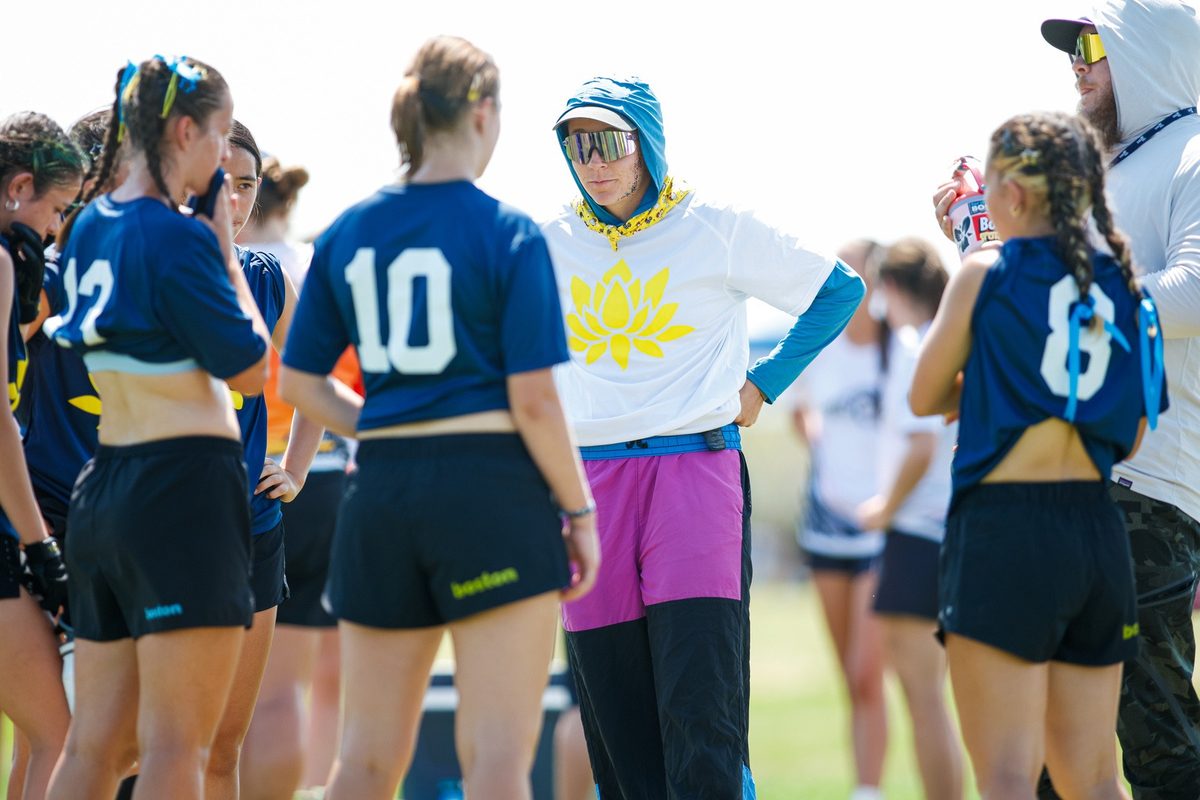
Can you share more about the youth scene at BUDA? What are your current youth playing opportunities?
We try to provide something for everybody. If you’ve never heard of ultimate before, we have something for you. And if you are playing six times a week and want to play a seventh, we have something for you — and everybody else in between. We have a lot of partnerships with local rec departments to put on Learn-to-Play and introductory clinics throughout the greater Boston area. And we have our large competitive teams. We offer summer camps, and through our partnership with Boston Glory also have more elite-level summer camps as well.
When you’re engaging new players, what is working locally when it comes to investing in the future of the sport?
People are so bought into this community. In the short time that I’ve been here, I’ve already seen how people come through a high school program, and are integrated into the community. They’ll graduate, and play a last year on YCC, and then they’re looking at, “How can I coach one of the regional teams to support future YCC player development?” And that’s how I really see BUDA investing in the future, we’re not just operating programs, people are investing back into our community. The youth at whatever stage they’re in are actively playing, but also actively giving back to the younger generation. So it’s a waterfall effect.
One of the things that is still newer but been extremely helpful is our partnerships with the city of Boston and Boston Parks and Rec. We recognize that they reach a target audience that we struggle to reach, and they have the field space but don’t have the programming for ultimate kids, so we’re finding ways in which we can partner with organizations like that to build the ultimate scene.
When thinking about building community, what barriers prevent youth from participating in ultimate in your area, and how’s your organization working to address them?
A lot of the barriers that you’d see with any other sport such as cost, transportation, field space and things of that nature exist, and can impact certain communities more than others.
On top of that, there’s the lack of knowledge of what ultimate is, and oftentimes I think that’s an under-identified barrier that is sometimes almost harder to overcome than the financial aspect. We can fundraise, and find ways to offer sliding scale fees to allow players to manage the cost of programs, but without an understanding of what ultimate is, and what it does for a player —not only on the field, but off the field — it’s hard to get buy-in.
You’ve talked about people staying in the community and reinvesting. Is there anything specific you’ve learned that helps make that happen?
I think a sense of responsibility, a sense of empowerment and a sense of belonging are all things that last beyond just having a good time. And that’s what really pulls youth in year over year. We can lead a clinic where everybody has a blast, and then we do it again and there’s 20 percent engagement from past participants. But when we lead a clinic where they had fun, but they also felt like they learned something, they were able to grow, and they were able to have some influence, it gets people coming back again and again. And so when you lead programming and can drop seeds for further ways for them to get involved, not just as players but as leaders and in other ways, I think that really encourages a kid to come back year over year.
How does your USA Ultimate affiliate relationship support what you’re doing locally?
The USA Ultimate affiliation gives BUDA access and exposure to the larger ultimate scene that’s happening across the nation. There’s a lot of resources and tools that we have access to that we utilize greatly, and some we probably underutilize. I’m still learning about those.
It gives us a sounding board. I think so many organizations are doing great work and USA Ultimate has a platform that allows these larger organizations to come together and share ideas around what they do well, and also where they need support. And so we’re using that as a space to refine the things that we need to work on, and also hopefully help others in the ways that they want to grow.
What are your organization’s biggest priorities for the next few years, and what do you want to offer youth that you aren’t able to offer today?
As I mentioned, we have a large population right now. However that population doesn’t accurately reflect the Boston population as a whole. And so as an organization, we want to be able to recognize who we aren’t reaching and try to reach those communities more. And so a large priority is expanding our middle school gx leagues as well as getting into more marginalized communities, and more communities of color.
We have a very strong depth of reach. We have multiple generations now that have come through the Boston pipeline and the BUDA pipeline. But historically, we’ve spent a lot of time expanding in the population that we already have, and so now we’re hoping to shift gears to reach more communities that haven’t heard of ultimate before, and really expand the sport through that lens.
How can initiatives such as the National Youth Ultimate Giving Week help organizations like yours create more opportunities for young people to experience this sport?
As youth ultimate continues to grow, there’s going to be a continued demand for accessible ultimate, and fundraising is going to be a crucial part of supporting that. BUDA is what I see every day, and it’s a large organization. But then I’ve talked to people that have never heard of BUDA, and they’re avid ultimate players. I’m hoping that this initiative allows more people to learn about the work we’re doing, and then for BUDA also to learn more about other organizations.
I go to a tournament, and I see people from all these regions, yet we’ve all come together for a singular goal. I think being able to bring that community aspect of ultimate into the fundraising space would be an interesting, and hopefully successful, thing.