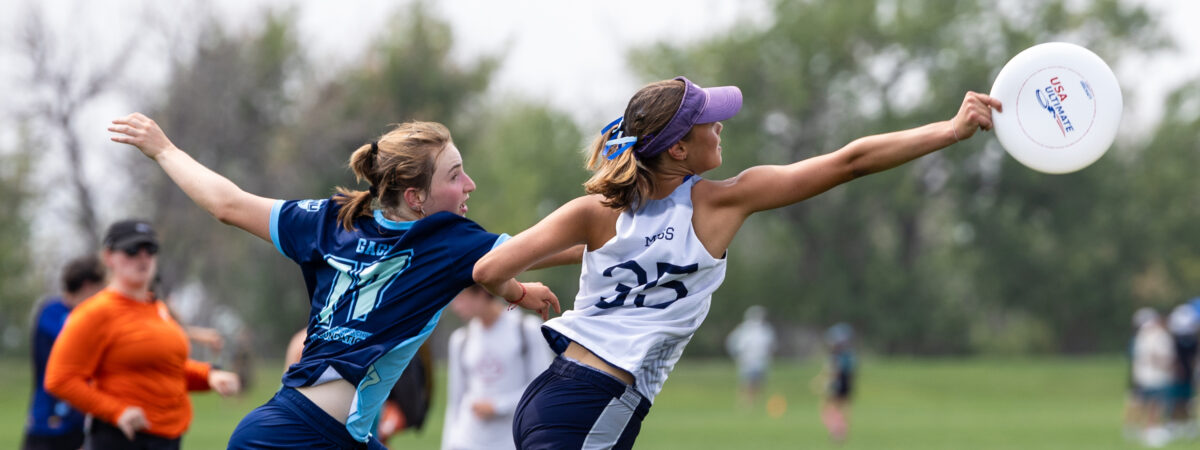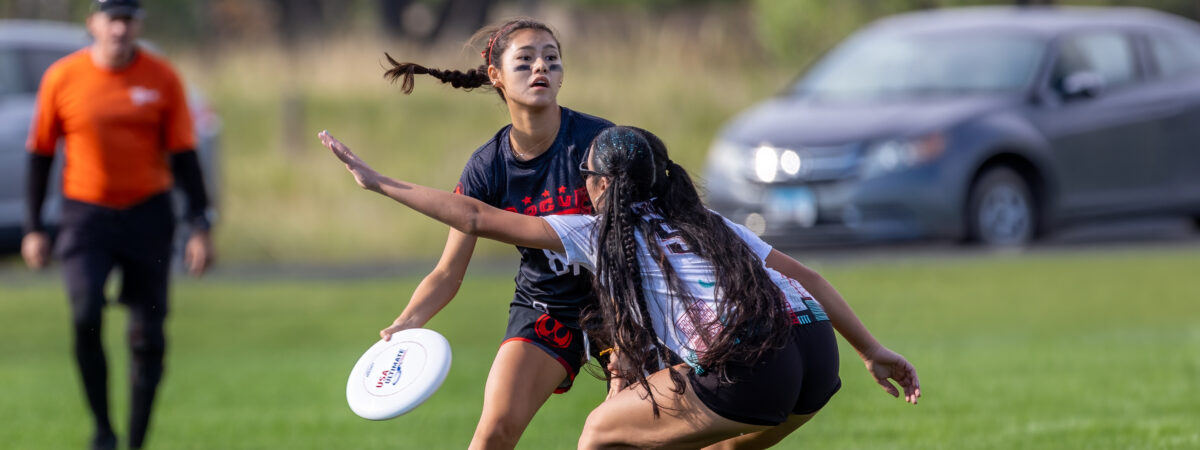
Colorado Springs, Colo. (July 14, 2026) – Today USA Ultimate, the national governing body for the sport of ultimate in the United States and member of the U.S. Olympic & Paralympic Committee, publicly released the findings from a recent study conducted by Clemson University to understand post-pandemic participation of women and girls in ultimate.
As youth programs across the country began to return post-pandemic, it became clear that a high number of high school girls programs were simply not returning, although the reasons for this disparity remained unclear. In an effort to provide local disc organizations with actionable answers, the new USA Ultimate Youth Department commissioned Athletic Leadership at Clemson University to conduct research into retention factors for women and girls within the sport of ultimate.
“When I stepped into the role of Director of Youth Programs in the fall of 2023 I was consistently hearing from local disc organizations that despite progress in rebuilding most programs post-pandemic, many high school girls’ programs seemed gone for good,” shared Dan Raabe, USA Ultimate Director of Youth Programs. “I reached out to the team at Clemson to help us understand what was going on, and how we might better support recruitment and retention for women and girls within the sport.”
The study examined women’s and girls’ participation in ultimate through a comprehensive approach that included national participation data from 2014–24, interviews with former players, focus groups with current collegiate, club, and semi-pro players, survey responses from nearly 1,800 participants and a social media analysis of online content.
First presented at the 2026 Organizer’s Convention, the study’s conclusions help to provide the sport a roadmap for post-pandemic recovery and future growth. In a clear positive take away, researchers found that women and girls are not leaving ultimate because they lack interest, motivation or enjoyment. Instead, they are leaving when participation environments fail to produce belonging, safety and sustainable pathways for success – all aspects of the sport that can be improved through intentional intervention and support. An overview of some of the significant themes and takeaways from the whitepaper is below.
Belonging and Inclusion
Survey results clearly show that women experience ultimate as inclusive in principle, but exclusionary in practice, with over half of the women surveyed reporting they feel overlooked or excluded within the sport. This is particularly applicable to mixed play, which supported retention only when women were intentionally valued. Interviews conducted revealed common sources of this disconnect within mixed play include limited touches, reduced leadership access, feeling physically mismatched and feeling undervalued. Positive mixed experiences centered women as decision makers as well as playmakers.
In addition to the challenges experienced in mixed play, pandemic shut downs intensified existing gender and youth pipeline challenges in ultimate, highlighting the need for flexible, inclusive and developmentally supportive entry pathways for girls. (This mirrors broader post-pandemic sport participation patterns.) The study found that middle school and high school are critical entry points for girls’ introduction to the sport and that girls’ underrepresentation reflects developmental and structural barriers, not disinterest.
Visibility and a Path to Success
The study also found that retention occurred when participation environments offered a competitive challenge with flexibility, and a visible future within the sport. The findings show that women do not disengage because they lack interest — they disengage when participation feels unsustainable. Access to women centered spaces and clear pathways for progress within the sport are necessary for retention. Lack of clear re-entry pathways following injury or life transitions was also an issue, with both visibility and access being key elements affecting whether women and girls return after disengagement.
Moving Forward
Based on their findings, the study’s authors provided the following recommendations for engaging and retaining women and girls within the sport:
- Design playing opportunities that provide for belonging, not just participation
- Create women centered entry and re-entry points at every level
- Stop treating mixed as the default solution for girls’ and women’s involvement
- Build flexibility into competition structures
- Invest in safety and injury prevention — especially for girls
The study’s authors note, “Addressing these challenges represents an opportunity — not a critique — to align ultimate’s stated values with participation structures that foster belonging, safety, flexibility and longevity across the life course. By intentionally redesigning how and when women and girls are welcomed, supported and celebrated, ultimate can strengthen its youth pipeline and build a more sustainable and inclusive future for the sport.”
The full text of the published whitepaper is available on USA Ultimate’s website, while additional data and resources will be made available exclusively to USA Ultimate affiliates looking to apply the findings from this study within their local ultimate communities. USA Ultimate continues to engage in opportunities to support and grow women’s and girls’ participation in the sport at all levels nationwide. Ongoing efforts include the refresh and relaunch of the Girls’ Ultimate Movement program this year, the introduction of a pilot grant program to stimulate women’s club division growth, providing additional support to players as they reach transitions between phases of play (e.g. high school to college) and dedicating additional resources to increase the visibility of girls and women within the sport — with additional new initiatives coming in 2027.
The study’s conclusion wraps with the following observation, “Women and girls are not leaving ultimate because they lack interest or commitment. They leave when belonging erodes, mixed play becomes exclusionary, re-entry feels risky and participation structures no longer align with their lives. Retention is not about motivating women to stay; it is about intentionally designing ultimate so women and girls can.”