| In recognition of National Youth Ultimate Giving Week, Tristan Green, Director of the Ultimate Foundation, sat down with participating USA Ultimate Affiliates from across the U.S. to gain insight into their organizations, youth programs, and investments in the future of ultimate. Find your local affiliate, and donate today! |
Executive Director for Triangle Ultimate Lauren Fayn shares how they are bringing new players to the sport by meeting kids where they are at and providing a path for player development through local partnerships, Learn to Play programs and leadership opportunities.
Can you tell us about Triangle Ultimate, your mission and how the organization has evolved over the years?
Triangle Flying Disc Association came about in 1997 as a group of adult organizers who wanted a more established opportunity to play, to be able to rent fields. There was a growing college scene and an adult league scene in the Triangle, and so they established the TFDA to be able to better offer leagues and programs to the community.
They later merged with the Triangle Youth Ultimate League, the organization that ran Triangle’s high school league and youth summer league, so that brought both the youth organization and the adult organization under one umbrella as Triangle Ultimate.
We’ve grown pretty quickly since that moment, going from a small 2-3 person organization to having three full time staff, AmeriCorps VISTAs, as well as hundreds of volunteers, program coordinators and contractors.
What makes the ultimate community unique in your area?
I think what makes Triangle specifically unique is we’re surrounded by such great colleges and college ultimate, so youth players, when they get plugged in, can see a full path forward through the sport and see themselves as lifelong players of ultimate. We have some amazing coaches that started off as Triangle Ultimate youth players who now give back and showcase ultimate on the national stage. Having an immediate connection between youth athletes and a higher level of competition can be really compelling.
How does your organization introduce new youth players to ultimate and help them find their place in the sport?
Our focus is just building up the love of the sport, and I hope that we continue to do that. We have been offering Learn to Play across the Triangle since around 2012, so we have a pretty established Learn to Play partnership across Chapel Hill, Raleigh and Durham. We have really leaned into Parks and Rec Department partnerships, building up programs where kids already live and play.
We partner with Durham Parks and Rec and offer Learn to Play and Learn to Compete through their parks department, and that is how we’re getting kids outside of our current ultimate community plugged in.
We’ve also begun partnerships with the Town of Apex and the Town of Cary. We’ve done some programming. in Chatham County as well, trying to build up our entry-level playing opportunities and expand that where kids already are.
I think the Parks and Rec departments have been critical because they’re helping us market ultimate to new audiences. Reaching new participants and building a lifelong love of the sport through the parks has been a great way to grow new participation.
We’ve also had some success building up elementary club programs focused on introducing kids to ultimate within their school system, kids who maybe wouldn’t otherwise have been exposed to the sport. This is very much thanks to the volunteers who’ve made those programs happen, because they’re very relationship-based with the local schools.
We also offer school-based middle school leagues that run in the winter, and that’s our biggest area of growth. We’ve had a lot of team interest and teams come together that are school supported. Then at the high school level we have 20-plus teams competing across the Triangle. We even had a team from Greensboro join our league this fall.
What opportunities does ultimate create for young people, both on and off the field?
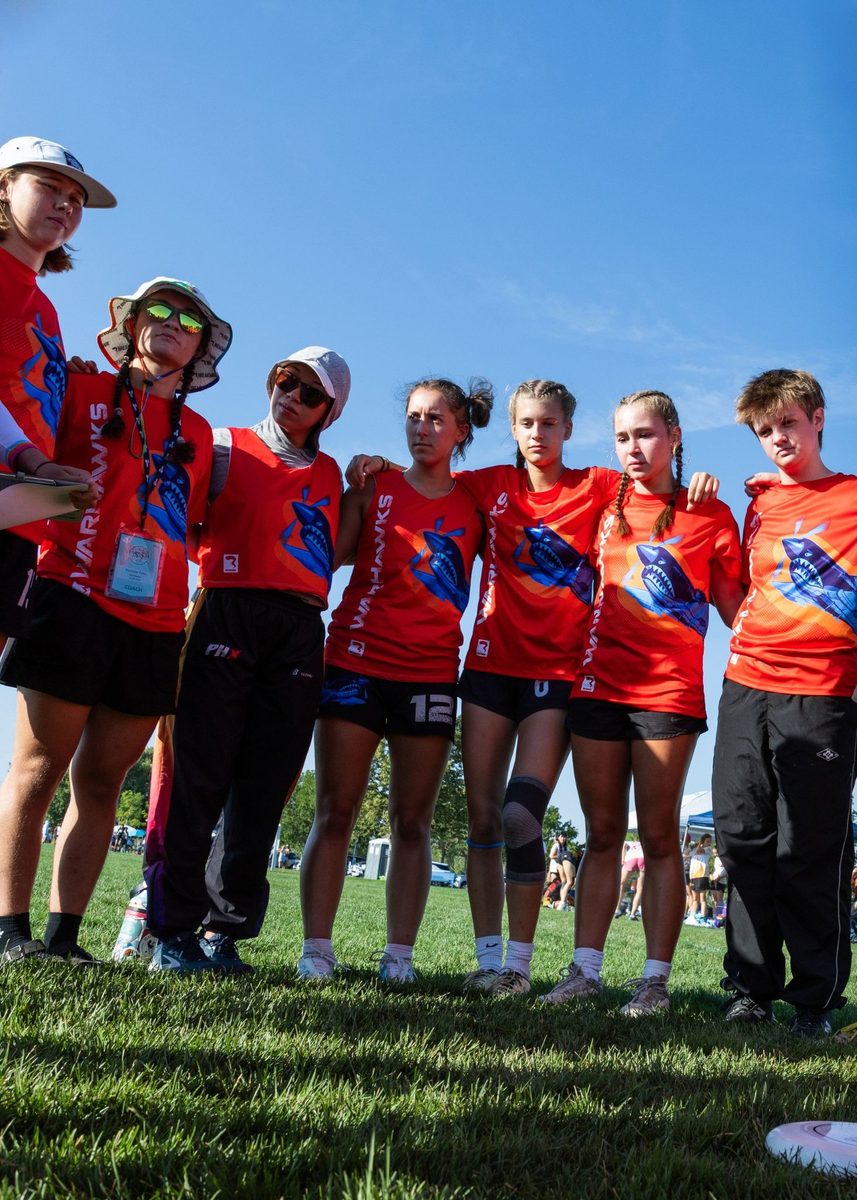
One thing that we’re actively working on right now, is building and establishing opportunities for youth to jump into leadership roles. We just started our youth leadership council, which is a working group of our youth committee. So now we have youth leaders across the Triangle who are going to weigh in on what they see as important for Triangle Ultimate to grow. Giving youth a voice in their programming is something I’m really excited for.
We’re also bringing back our youth leadership program for girl matching players, which are classroom working groups. We just had a planning meeting last week and I’m super excited for the topics and things that we’re bringing to that group. S alongside the opportunity to lead on the field, we’re also giving these players a say in the future of our nonprofit’s growth. That is leadership experience they will bring into their college careers or their life outside of ultimate.
What barriers prevent youth from participating in ultimate in your area, and how is your organization working to address them?
We are building up pay what you can programs and making our programs financially accessible. I think especially in our current economic season, it’s hard for parents to find after school or weekend programming for their kids that’s cost effective. So giving them an affordable opportunity to try a new sport does get new potential families off the fence and trying something new.
Building up programs where kids already are, like our elementary programs at schools, means that transportation is not an issue, scheduling is not an issue for families. Same with running Parks and Rec programs in neighborhoods where kids already live. We are still actively trying to get middle school and high school programs supported by schools, but we have the resources and support systems to help those teams operate as clubs outside of the school as needed.
How do you create opportunities for different ages, backgrounds and experience levels?
One thing that we’ve really focused on this past year, just looking at the trends of girl matching players in ultimate and specifically in our community, is being intentional about creating welcoming, inclusive spaces for girl matching players. Also hearing feedback from our community and broader national trends that show girls are priced out of youth sports at a different rate than boys. So, we’re making all of our girl matching programs free for the next two years to help build up girl matching player participation and retention, while offering intentionally welcoming, entry-level playing opportunities. We’re creating opportunities for girls to connect socially in a low stress, low competition environment, where they can also gain some skills and feel more confident.
What have you learned about what keeps kids involved in ultimate over the long term?
Building that lifelong love at the beginning, from their first point of entry. Making it fun, making sure we have high-quality trained coaches that feel confident in their ability to lead and execute the curriculum that we’ve built. Also making it as easy as possible for their parents to know the next pathway, the next program for them to keep them interested. So if they learn to play, how are we communicating about youth rec league, or the opportunity to play middle school? I think it’s on us to be sure that our messaging and marketing is clear, but the relationships that coaches make on the ground, and those first experiences, are really the most important determiner for if kids come back.
How does the USA Ultimate Affiliate relationship support the work of Triangle Ultimate?
One big thing that is really meaningful and impactful to our programs is the Play It Forward memberships. For any participant in our entry level programs who choose the no cost payment option for our program, USA Ultimate honors that financial accessibility by offering free memberships. This not only allows them to play, it gives them access to a full year of Triangle Ultimate programs with that membership. This helps make our Pay What You Can program sustainable for us to continue running, and supports those players’ continuing participation.
Another benefit that we really enjoy is that our NC Center for Nonprofit Membership is covered by USA Ultimate, so whenever we have legal, compliance or nonprofit related questions we can go to that resource and have that available to us without the additional cost.
What’s the importance for Triangle Ultimate of growing through fundraising, and not just growing through pay-to-play programming?
National Youth Ultimate Giving Week spotlights the work that affiliates are doing on the ground, and the sort of funding that helps make our pay what you can programs accessible. If we want to continue offering pay what you can programs we’re going to continue to have to fundraise to support them. But level the playing field initiatives also go towards supporting coaches and training coaches.
I think the best way for the ultimate community to invest is to coach and support youth programs. We’re always trying to get parents to coach. You don’t need to be a coaching expert to support a Learn to Play or to coach a middle school team, we can train folks on that, and these funds make those programs financially accessible.